Service & Product
AZUL Catalyst
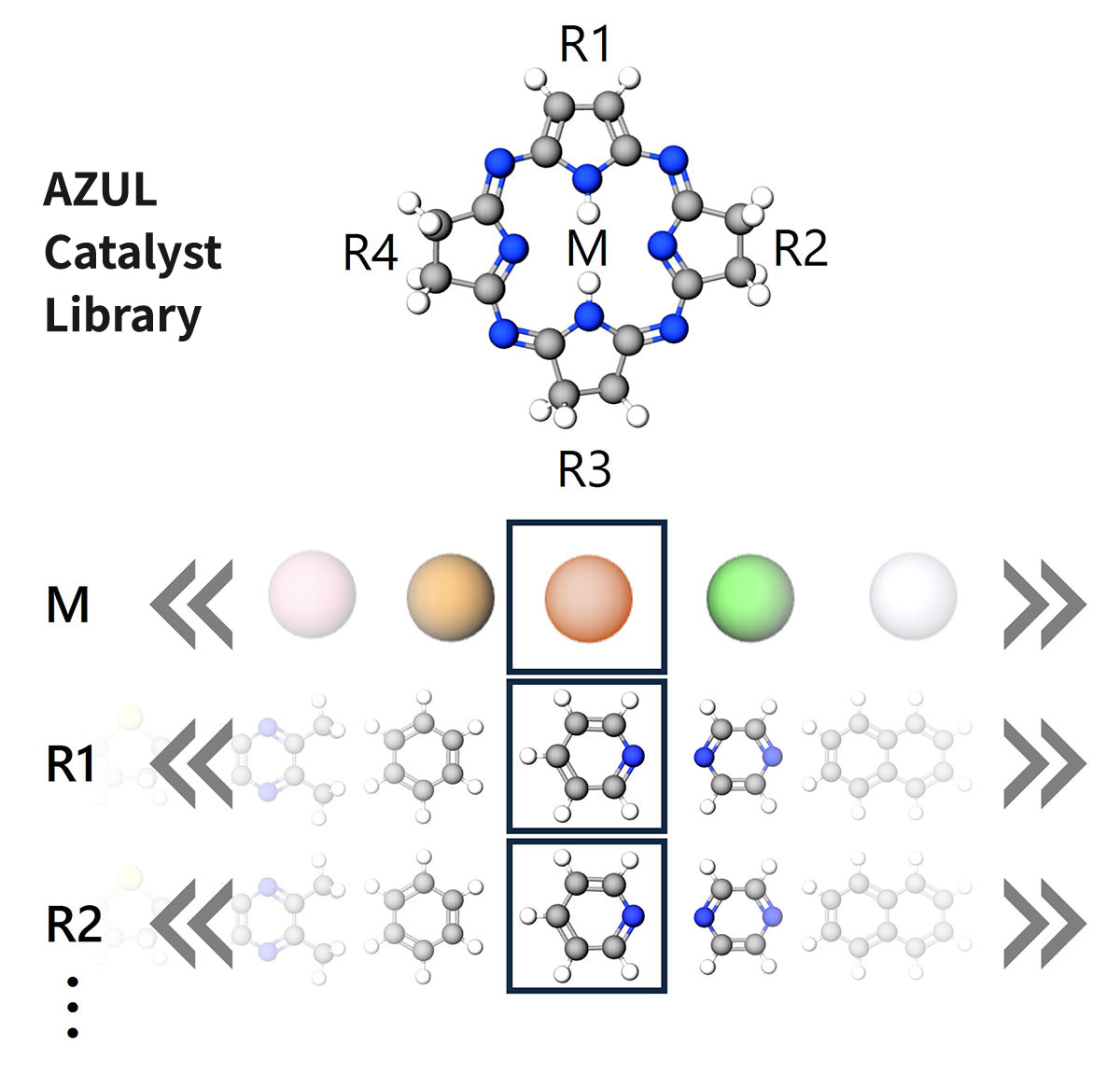
A library of more than 200 catalysts
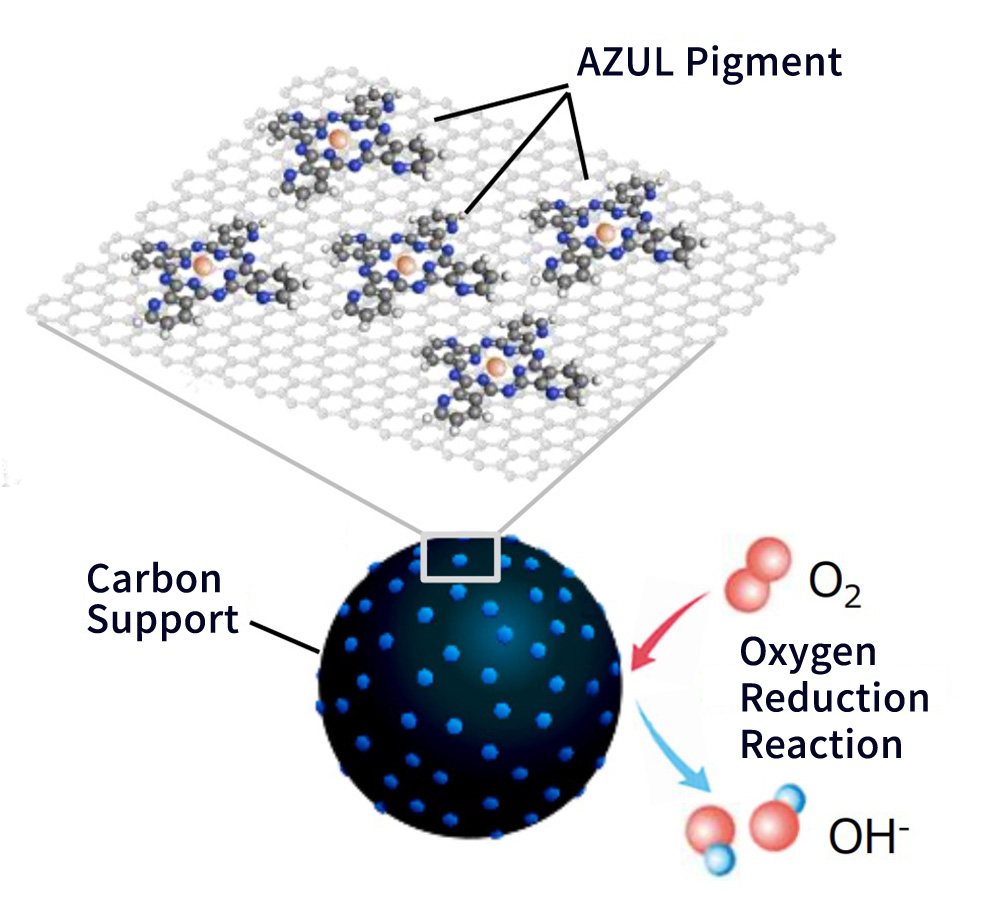
AZUL Catalyst was developed at the Yabu Laboratory at Tohoku University as a rare-metal-free oxygen reduction reaction (ORR) catalyst. By supporting proprietary AZUL dye in a monolayer at high density on carbon carriers, we optimize the electronic state of the central metal at reaction sites and achieve high ORR catalytic activity without using rare metals such as platinum.
Key features include:
- Rare-metal-free: Catalyst materials with low resource constraints, without using rare metals such as platinum
- High ORR catalytic activity: Under alkaline conditions, performance exceeds manganese dioxide catalysts and matches or exceeds platinum carbon catalysts
- High safety: Lower ignition risk typical of rare-metal catalysts; can be handled using alcohol solvents
- Broad applicability: Usable in R&D for various electrochemical devices, including air electrodes for fuel cells and metal-air batteries
- High mass-production suitability: Can be mass-produced without special chemical processes
Third-party evaluation has confirmed that an anion exchange membrane (AEM) fuel cell using AZUL Catalyst achieves an open-circuit voltage (OCV) of 0.80 V or higher and a maximum power density (Pmax) of 700 mW/cm² or higher, making it a high-performance catalyst for research applications.
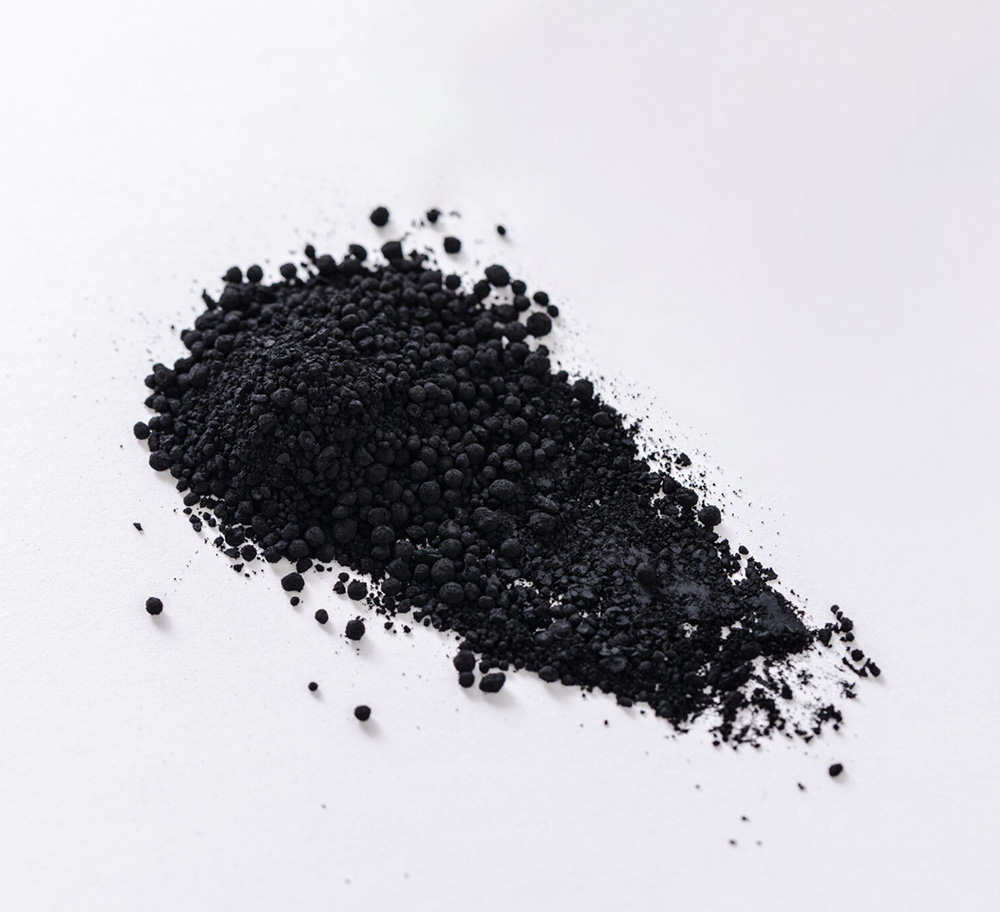
As of July 3, 2026, we have begun selling AZUL Catalyst as a reagent.
From the same date, it is listed in the reagent catalog of FUJIFILM Wako Pure Chemical Corporation, and customers at research institutions, universities, and companies nationwide can purchase it through Wako Pure Chemical. Until now, AZUL Catalyst was provided primarily as custom products through joint research and individual contracts; by offering it as a reagent, we have created an environment where more researchers and engineers can use it.
Material Formats Tailored to Customer Needs
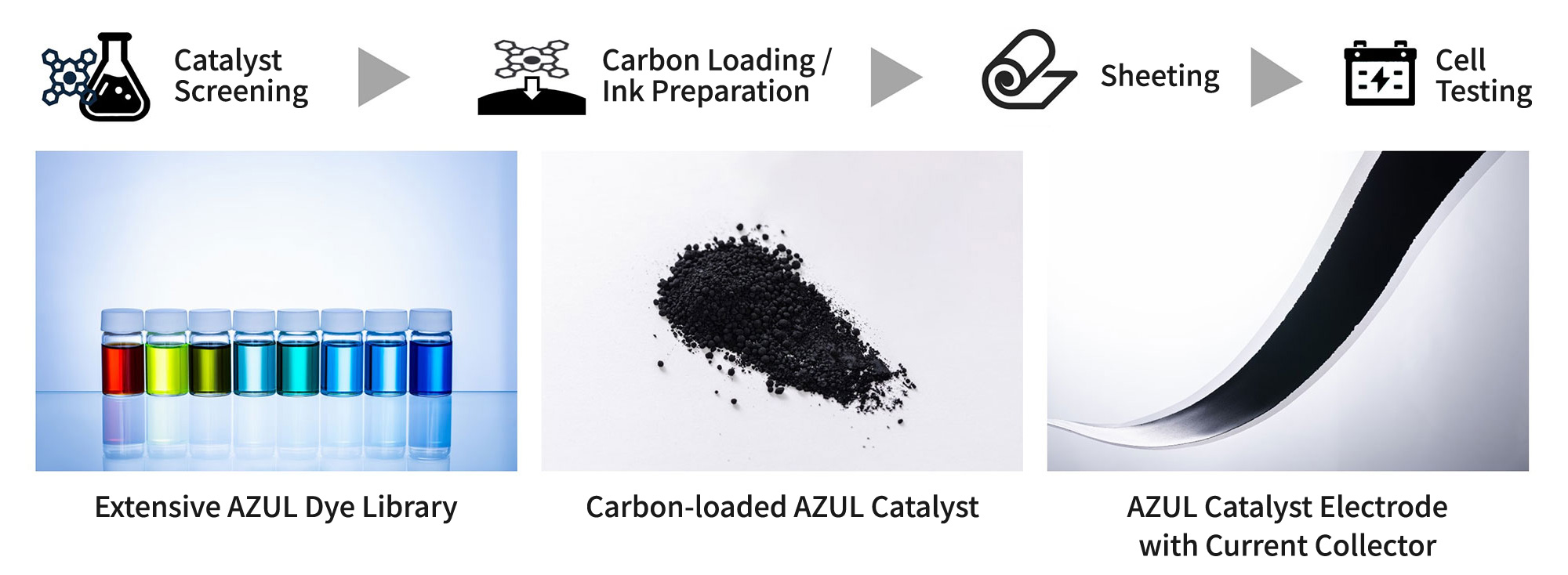
Beyond synthesizing catalyst molecules, AZUL Energy offers expertise in selecting carbon supports suited to each application, in ink dispersion technology for coating onto substrates and in sheet fabrication know-how, as well as in-house initial-performance evaluation using battery cells. We propose the optimal material format for each customer’s needs.
Comparison with Competing Catalysts
| Catalyst Performance | Durability | Scalability | |||
|---|---|---|---|---|---|
| Cost | Sustainability | Safety | |||
| Manganese Dioxide |
Low | High (inorganic material) | Low cost | Abundant resources | Harmful to humans |
| Platinum | High |
High heat and pressure resistance, but some degradation from aggregation |
¥5M/kg |
Resource constraints (Annual production 190 t vs. projected need of 1,400 t by 2040 *1) |
Fire and explosion risk Harmful to humans |
| AZUL Catalyst |
Lower energy loss than platinum during ORR |
More constraints in electrode manufacturing than platinum |
Cost reduction to roughly one-tenth of platinum |
Mass-producible in chemical plants ~99% lower manufacturing CO₂ vs. platinum |
No ignition risk or toxicity *2 |
- *1 Based on LDES Council estimates of catalyst requirements if the LDES zinc-air battery market reaches USD 100 billion.
- *2 Confirmed via Ames mutagenicity testing and acute toxicity testing in medaka fish.
Metal-Air Battery — Ferion
High Capacity × Safety
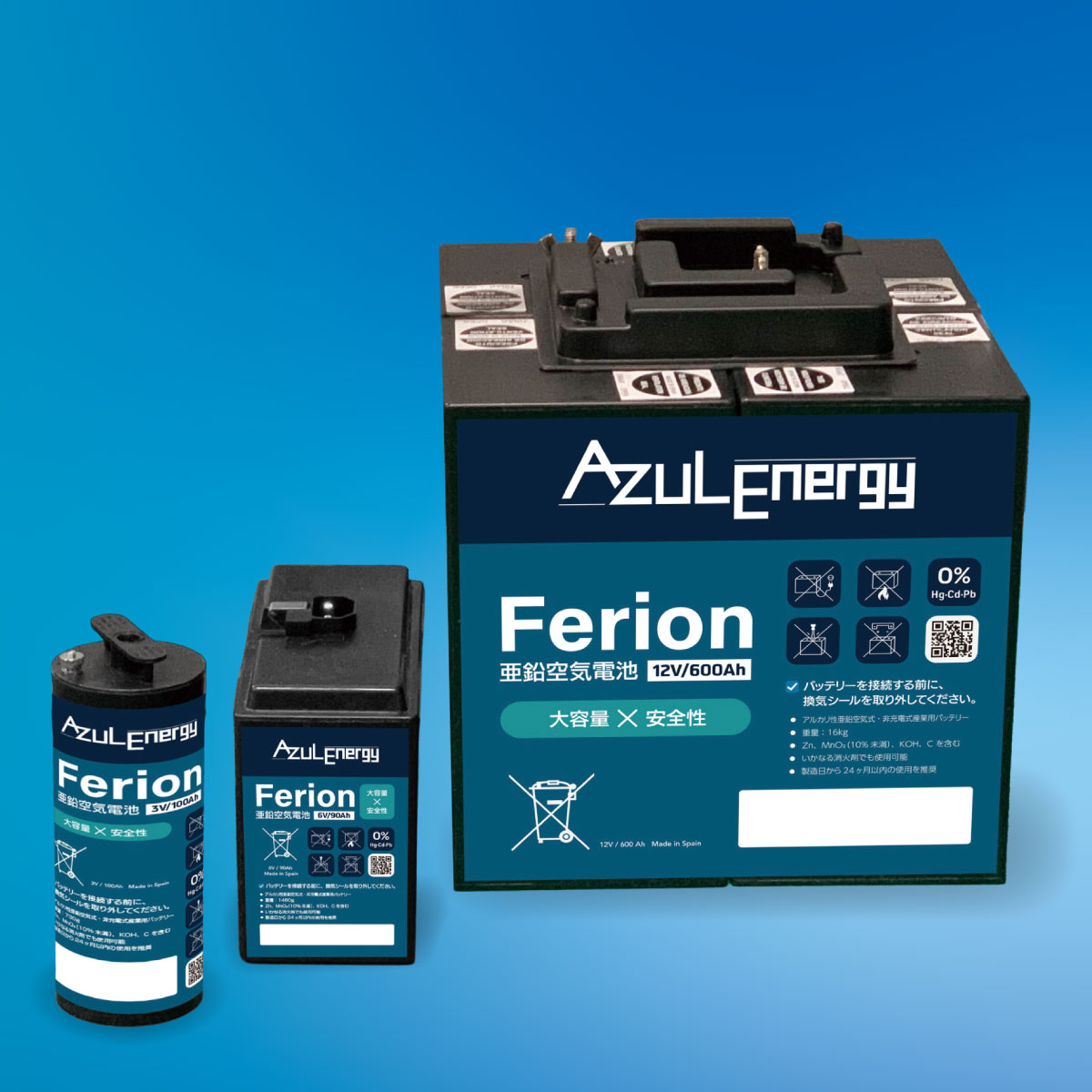
High capacity in a compact form,
affordable yet long-lasting —
the most cost-effective air battery.
A safe, maintenance-free
next-generation battery.
Ferion offers outstanding energy density — roughly three times that of conventional lithium-ion batteries. Its cell design avoids scarce resources, keeping the cost per kWh low. Ferion also excels at long-term storage: it begins operating only when the seal is opened, and its low self-discharge enables up to two years of shelf life. With no risk of thermal runaway and production at ISO 14001-certified facilities, safety and environmental responsibility are built in.
What is a Metal-Air Battery?
A metal-air battery generates electricity using oxygen in the air. One electrode is a metal, and power is produced through the dissolution of the metal combined with the reduction of oxygen.
By using atmospheric oxygen as the active material, metal-air batteries achieve high energy capacity while combining low cost with large capacity. Ferion uses a mechanical charging method, in which the metal anode and electrolyte are replaced — dramatically shortening charging time and enabling repeated discharging.
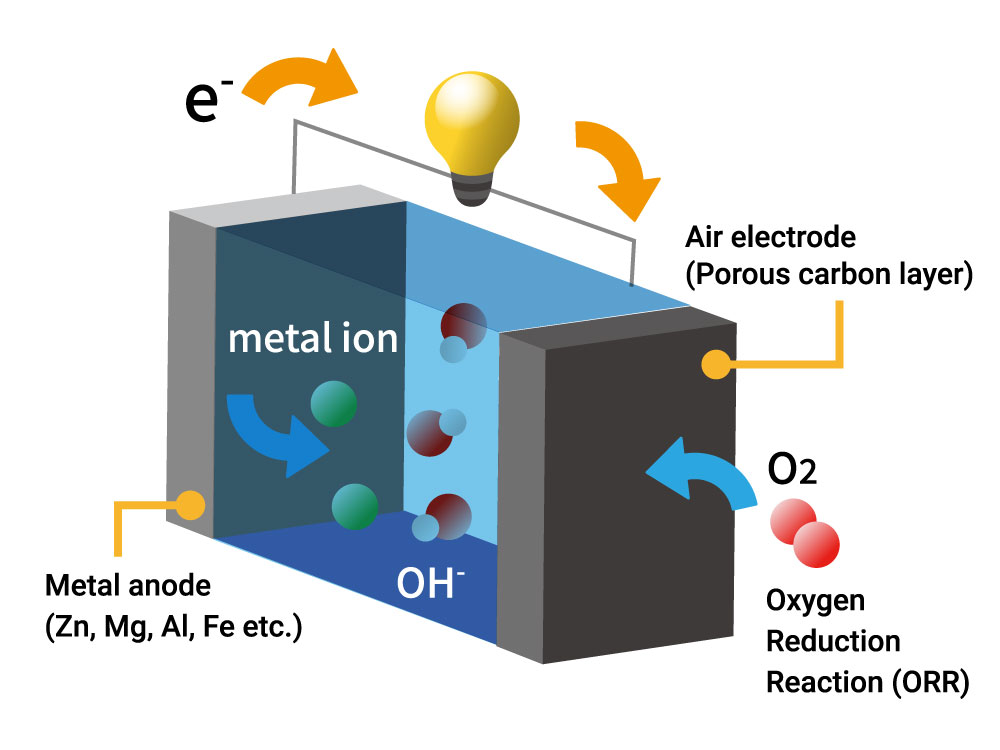
Principle
Air batteries use oxygen from the surrounding air to generate power. One electrode is a metal, and electricity is produced through the dissolution of the metal and the reduction of oxygen.
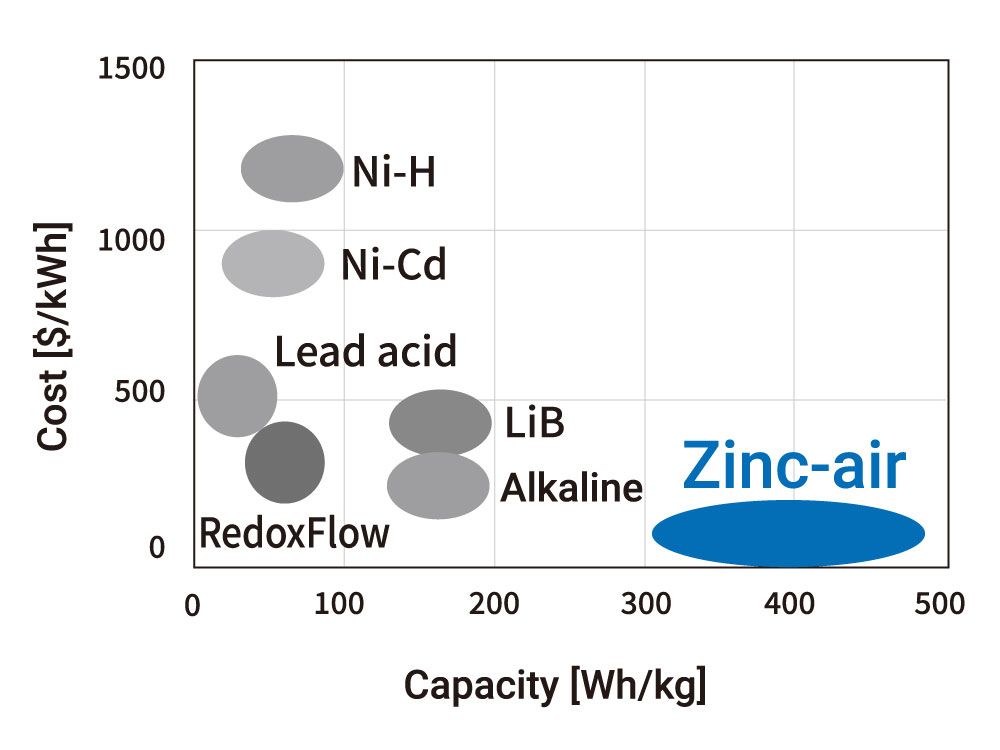
Key Features
- Using atmospheric oxygen as the active material delivers high energy capacity
- Combines low cost with large capacity
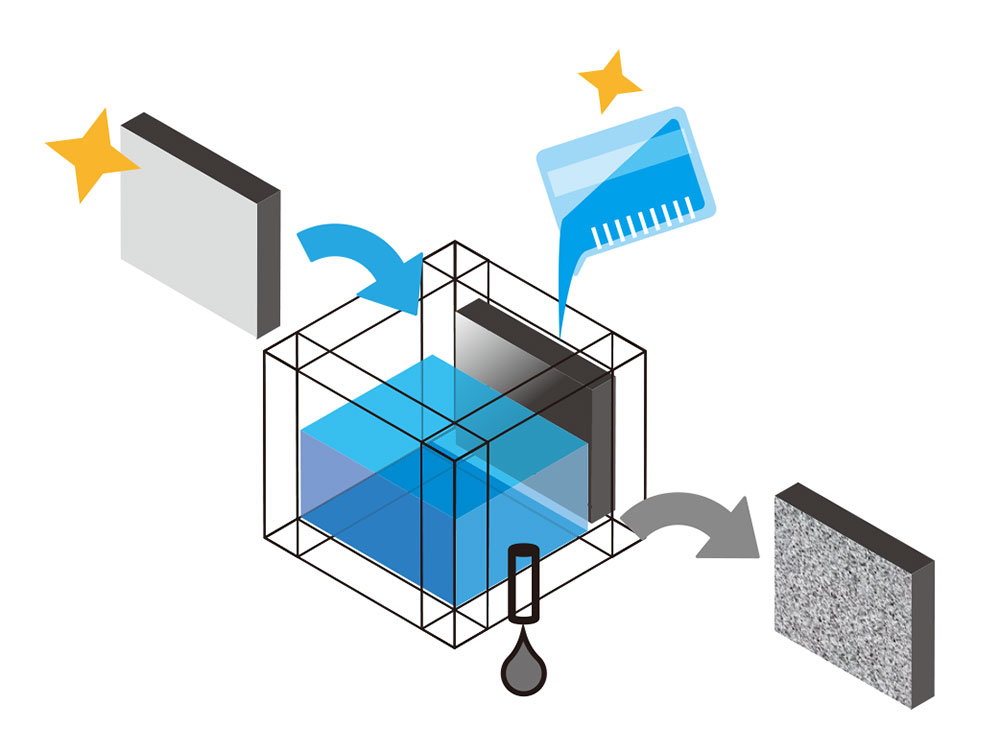
Charging Method
Ferion is charged by replacing the metal anode and electrolyte — a mechanical charging method that drastically shortens charging time and enables repeated discharging.
Comparison with Lithium-ion Batteries
Compared with a typical lithium-ion battery, energy density is 3–5x higher. Safety is also strong, making Ferion ideal for sustained, long-duration use.
| Battery type | Energy density | Output | Safety | Cost | Resources |
|---|---|---|---|---|---|
| Lithium-ion battery | 100–250 Wh/kg | High-power applications | Risk of fire and explosion | $100–200 / kWh | Requires rare metals such as Co and Li |
| Metal-air battery | 300–1,000 Wh/kg | Long-duration discharge | No risk of fire | $10–100 / kWh | Abundant, low-cost metals such as Fe, Al, and Zn |
Applications of Air Batteries
Their combination of large capacity and high safety makes air batteries well-suited to a wide range of use cases.

Wildlife-damage prevention power
Long capacity reduces the burden of battery replacement, and the absence of fire risk allows safe deployment in mountains and farmland.

Security power for off-grid areas
Ideal for IoT devices monitoring locations without electricity, helping to cut maintenance time and labor cost.

Signage & lighting for temporary or hazardous sites
Safe outdoor use for construction sites and temporary structures, with outstanding cost performance.
AZUL Supercapacitors
Electrode material featuring AZUL catalyst molecularly adsorbed onto activated carbon increases capacitor capacity by 2.6 times. Extended peak response time enables anticipated demand for UPS applications in AI data centers and similar facilities.
Technical Features
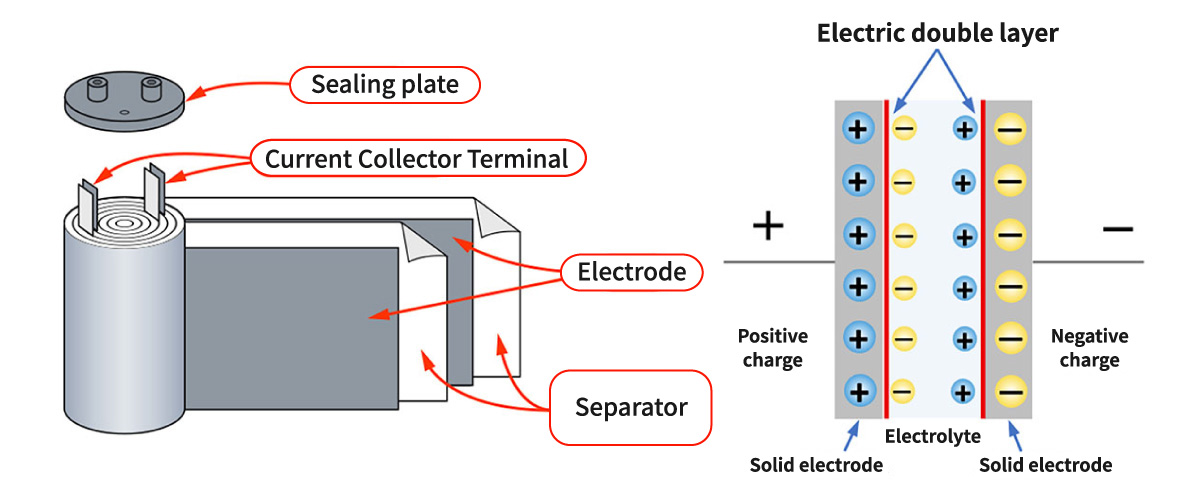
What is a capacitor?
- An electric double-layer capacitor (EDLC) has a simple structure: an electrolyte sandwiched between carbon electrodes placed facing each other internally.
- When voltage is applied, ions line up at the interface between the electrodes and the electrolyte, forming a structure called an “electric double layer.” Utilizing this enables high-speed charging and discharging.
- However, its charge/discharge capacity is low, posing challenges for sustaining peak periods in UPS applications (power-specialized storage device).
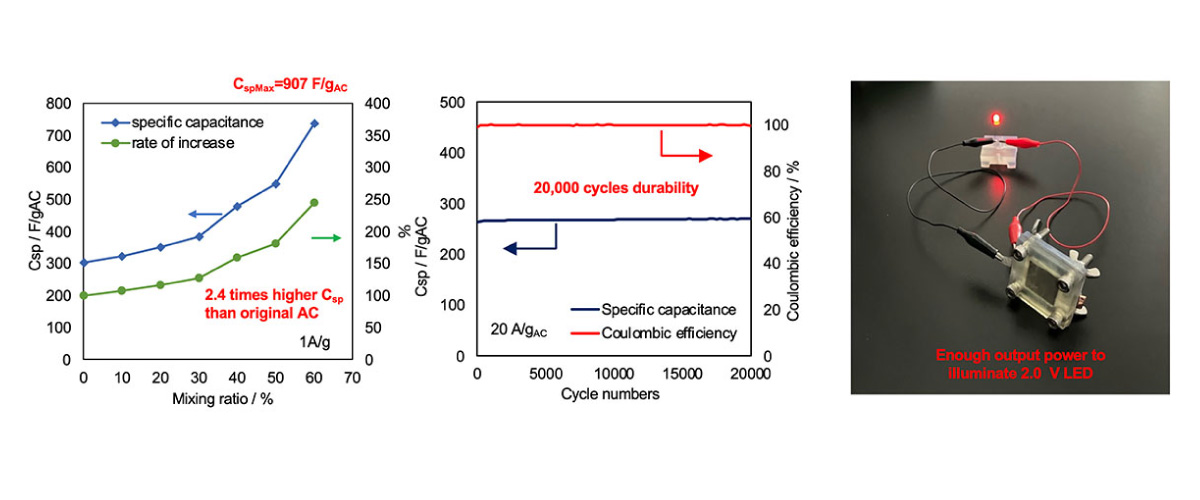
AZUL Capacitor Technology Overview
- Capacitors fabricated using electrode materials with AZUL catalyst molecularly adsorbed onto activated carbon. The redox reactions of the catalyst are utilized as pseudo-capacitance, achieving a supercapacitor.
- Achieves a specific capacitance of 907 F/g AC*, 2.6 times higher than pure carbon.
- Achieves 20,000 charge-discharge cycles and sufficient power supply for applications like LED lighting.
- Patent pending (Japan, US, Korea: Registered; Europe, China: Pending).
Challenges in Power Supply for Data Centers
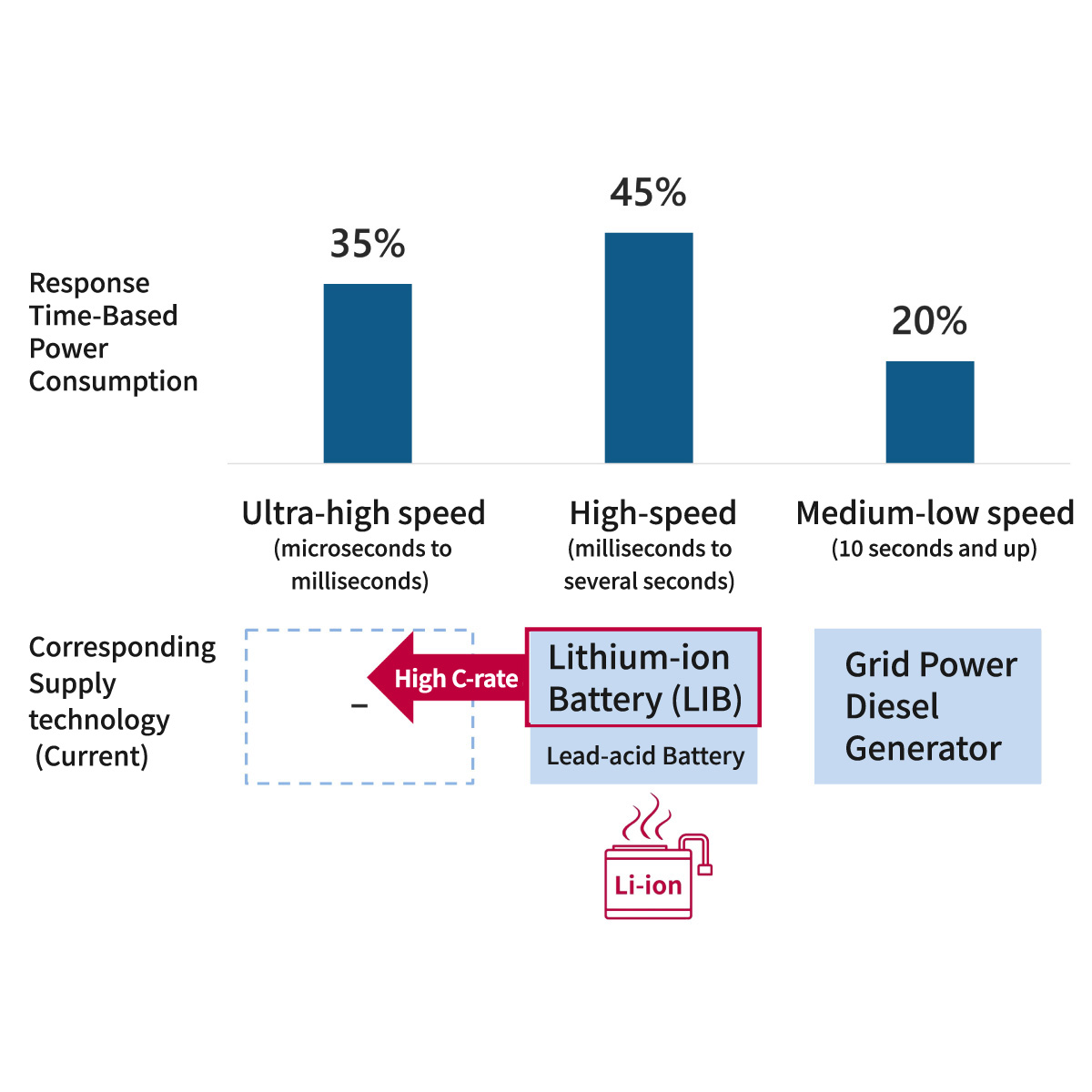
AI training requires unprecedented speed and scale—a burst of power. Using LIBs with high C-rate discharge increases thermal loss, cooling load, and accident risk.
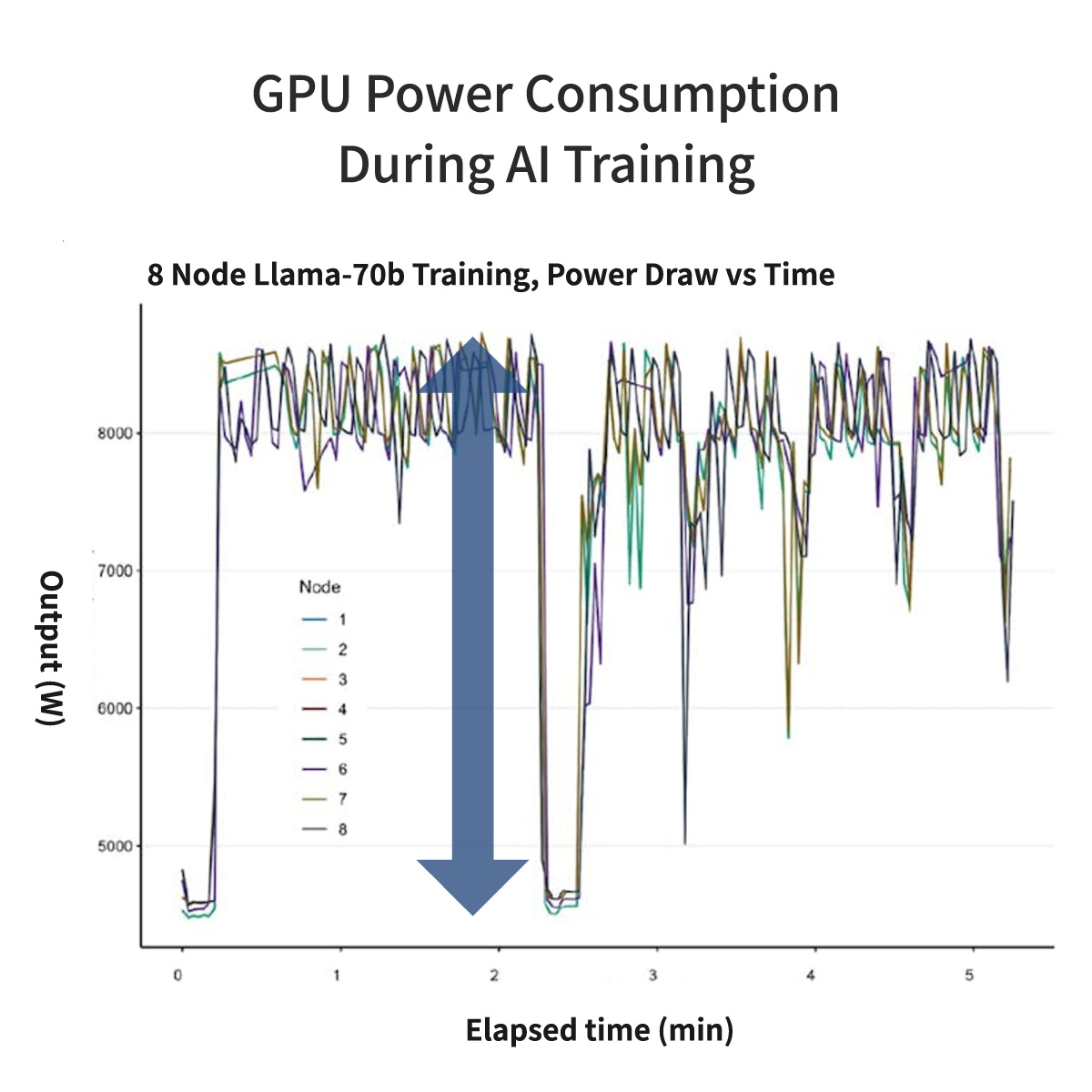
Energy Storage Solutions for Data Centers
Utilizing AZUL supercapacitors for high-speed response reduces energy storage load by 30% and cooling load by 15%. Capable of reducing overall data center OPEX by 7-10%.
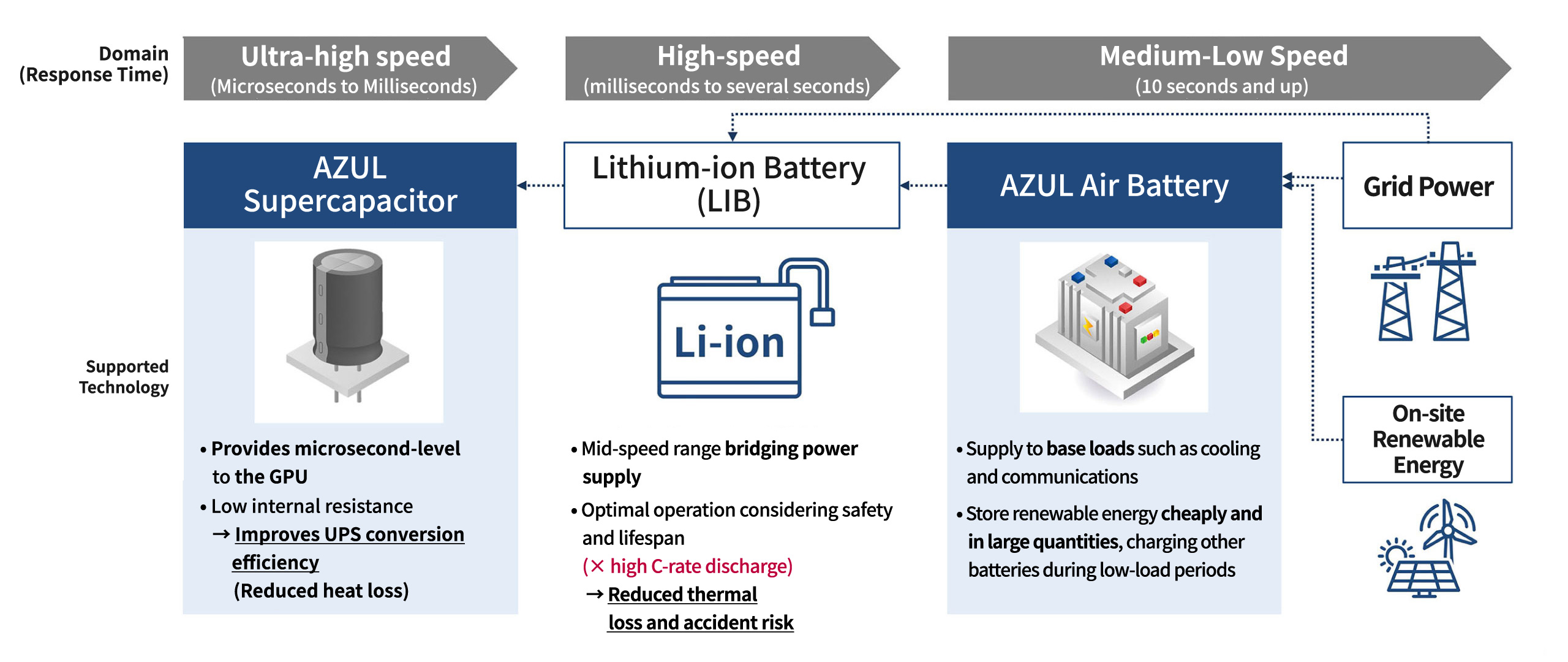
*When combined for high-speed response, AZUL Supercapacitors contribute to reducing total operational costs (OPEX) across the data center.